1. How do I choose a restaurant that's easier to hear in?
Look for soft things. Carpets, curtains, cushioned seating, tablecloths and low ceilings all soak up sound. Bare brick, concrete floors, open kitchens and high ceilings bounce it around.
Smaller places are often easier than big, buzzy ones. Booths and alcoves can help a lot.
Check photos and reviews before you book. Words like "lively", "buzzing" or "great atmosphere" often mean loud.
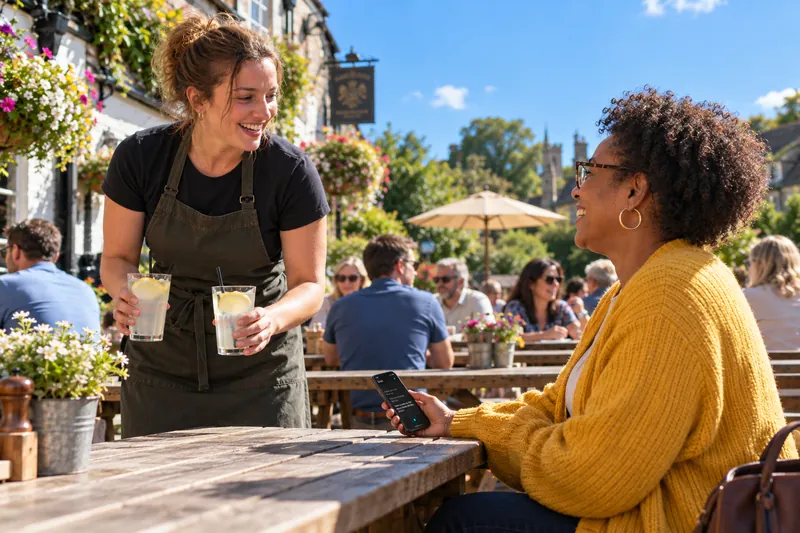
Outdoor tables can be easier too, because the sound has somewhere to go. Pick a spot away from traffic and the door.
2. When is the quietest time to eat out?
Early is usually best.
A late lunch on a weekday, or dinner at 5.30 or 6pm, can be much calmer than Friday at 8pm. Pubs are often quieter before the after-work crowd arrives. Avoid nights with live music, quizzes or big matches on screen.
If you're not sure, ask when you book.
"When are you usually quietest?"
3. Where's the best seat if you're hard of hearing?
Back to the wall, facing the room.
That way the noise of the room is mostly behind your companions rather than behind you, and you can see their faces. Corners are good. So is the end of a table.
Then think about light. You want light falling on the faces of the people you're talking to, not shining into your eyes from behind them. A seat with your back to the window usually does this.
Stay away from:
- speakers and the music
- the kitchen pass and the coffee machine
- the bar, the door and the toilets
- big groups and parties
If your hearing is better on one side, sit so your better ear faces the people you'll talk to most.
4. What should I say when I book?
Most booking forms have a notes box. Use it, then say it again when you arrive.
"I'm hard of hearing. Please could you seat us somewhere quiet, away from the speakers and the kitchen?"
"Could we have a table in a corner or a booth if you have one?"
If phone calls are difficult, book online or by email instead, so your request is in writing.
If the table you're shown is next to a speaker, it's fine to ask to move. Ask straight away, before the drinks arrive.
5. How can I order without mishearing?
Ordering is short and predictable, so a few habits go a long way.
Tell the server at the start. One sentence is enough.
"I'm hard of hearing. Please face me when you speak, and I'll be fine."
Point at the menu as you order. It removes any doubt about which dish you mean.
The tricky part is usually the questions that come back: "Chips or salad?", "How would you like it cooked?", "Still or sparkling?". If you catch only part of it, ask them to point to the option on the menu or say it a different way.
"Sorry, could you point to it?"
You can also read the menu in advance, decide your answers, and say them all at once: "The burger, medium, with salad instead of chips, please."
For specials read out at the table, ask if they're written on a board or could be jotted down. And when the bill comes, the card machine shows the total. Check it there.

6. How do I make sure I've understood about allergens?
This is the one place where "I think they said" isn't good enough.
Food businesses must be able to tell you whether your food contains any of the 14 major allergens, such as peanuts, milk, eggs, sesame, cereals containing gluten, or crustaceans like prawns. In England, Wales and Northern Ireland, Food Standards Agency guidance says that for food made on site, this information can be given verbally, as long as there's a notice explaining how to get it. The FSA also advises businesses that written allergen information, supported by a conversation, works best for customers.
So ask for it in writing.
"I have a nut allergy and I'm hard of hearing. Please could I see your allergen information in writing?"
Many places have an allergen menu, folder or matrix. Read it yourself. Then confirm the dish you've chosen by pointing to it: "Is this one safe for a nut allergy?" Ask them to nod or write "yes" rather than relying on a quick answer across a noisy room.
The FSA's advice to diners is to call ahead to check a venue's allergy policy, speak to staff when you arrive, and remind them about cross-contamination. It also says that if you have any doubt about staff understanding the importance of your dietary needs, don't eat there.
That applies doubly if you couldn't hear the answer. If you're not sure, don't risk it.
In Scotland, food law is handled by Food Standards Scotland, which consulted in 2026 on strengthening the rules on written allergen information. Asking to see it in writing is still the safest approach wherever you are.
7. How do I follow a group meal?
Groups are hard for anyone with hearing loss. Separate conversations across a long table make it worse.
Sit in the middle of the people you most want to talk to, not at the far end. A round table is better than a long one. If you're organising, a smaller group or a booth helps more than any gadget.
Ask your group, before you go, for a few simple things:
- one conversation at a time where possible
- say who's talking or what the topic is when it changes
- don't talk with a hand or a glass over your mouth
- fill you in if everyone laughs at something you missed
RNID suggests moving somewhere quieter if possible and asking people to face you, because many people rely on lipreading to some degree. Our guide on how to talk to someone hard of hearing is a good link to share with friends and family before a big meal. For birthdays and Christmas at home, see family gatherings with hearing loss.
8. Can hearing aids or gadgets help in noisy restaurants?
Sometimes, yes.
Hearing aid settings. Many hearing aids have different programmes or settings. If restaurants are a problem, tell your audiologist. They may be able to set up or adjust a programme for noisy places.
Remote microphones and personal listeners. RNID describes personal listeners as small, portable devices that pick up speech and make it louder. Some can connect to hearing aids. Put the microphone near the person you want to hear. RNID gives a price range of £80 to £600 for personal listeners, so ask your audiologist what works with your hearing aids before buying.
Hearing loops. Some bars and counters have a loop. Look for the sign: a white ear on a blue background with a "T" in the corner. To use it, switch your hearing aid to the telecoil or "T" programme. Your audiologist needs to have set this up, so ask them if you're not sure.
9. Can live captions help at the bar or counter?
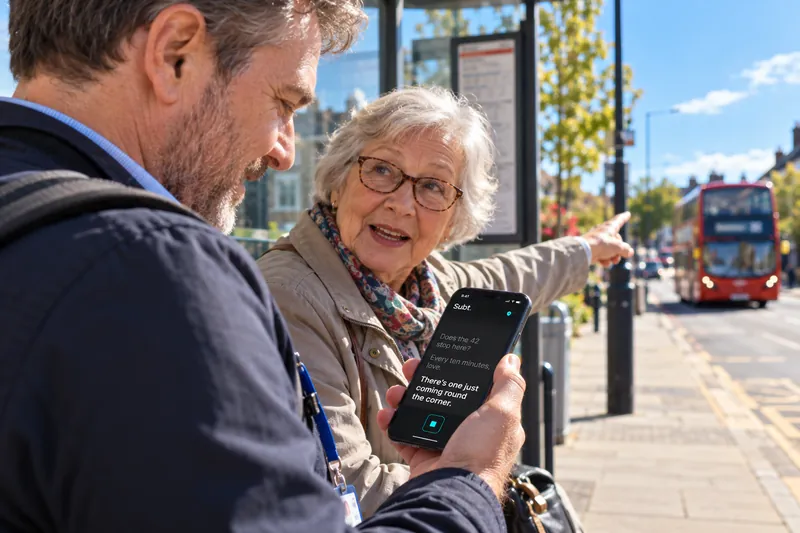
They can help with the short, practical exchanges: ordering at a busy bar, asking about a table, checking what's in a dish.
Subt is one option. Open the free web app, put your phone on the counter between you and the person serving, and their words appear as large text. The web version uses your browser's speech service in Chrome, Edge or Safari; the coming £1.99 iPhone app processes captions on-device. Loud music and several voices make any captioning harder, so for allergies always read the written allergen information too. For other options, see the best free live caption apps.
Quick answers
Can I ask a restaurant to turn the music down?
Yes, you can ask. Some will, especially at quieter times; others can't because of other diners. Asking to move to a quieter table is often more successful.
Do restaurants have to give allergen information in writing?
Not always. In England, Wales and Northern Ireland, FSA guidance allows allergen information for food made on site to be given verbally, with a notice saying how to get it, but the FSA recommends written information supported by a conversation. If you can't hear the answer clearly, ask to see it written down.
What's the best restaurant seat for hearing loss?
Back to a wall or in a corner, facing your companions, with light on their faces, and away from speakers, the kitchen, the bar and the door.
Sources
- GOV.UK (Food Standards Agency): Allergen guidance for food businesses
- GOV.UK (Food Standards Agency): Food allergy and intolerance advice for consumers
- Food Standards Scotland: Public consultation on allergen information
- RNID: How to communicate with someone who is deaf or has hearing loss
- RNID: Technology to make conversations clearer
- RNID: Assistive listening systems in public venues