NHS 111 covers England. Scotland, Wales and Northern Ireland are covered in section 8.
1. How can I contact NHS 111 if I'm deaf?
There are three ways, and none needs you to hear a phone call. The NHS lists them as:
- 111 online at 111.nhs.uk
- British Sign Language through signvideo.co.uk/nhs111
- Text relay by calling 18001 111, 24 hours a day
NHS 111 is free and open 24 hours a day. It's for when you think you need medical help now but it isn't life-threatening.
Pick the one that suits you, and the situation. If typing is hard because you're unwell, a BSL video call may be quicker. If you're more comfortable in written English, 111 online or text relay may suit you better.
2. How does NHS 111 online work?
You answer questions about your symptoms, and it tells you where to get help. It's for anyone aged 5 or over.
Depending on your answers, the NHS says you might be told to:
- call 999 or go to A&E
- go to an urgent treatment centre
- see an evening and weekend GP
- book a callback from a nurse
- get urgent specialist support for dental or mental health problems
- see a pharmacist for a minor illness
- contact your own GP surgery
- look after yourself at home
One thing to watch: a callback from a nurse is a phone call. If you can't take one, it may be better to contact 111 through BSL or text relay instead, so the conversation happens in a way that works for you.
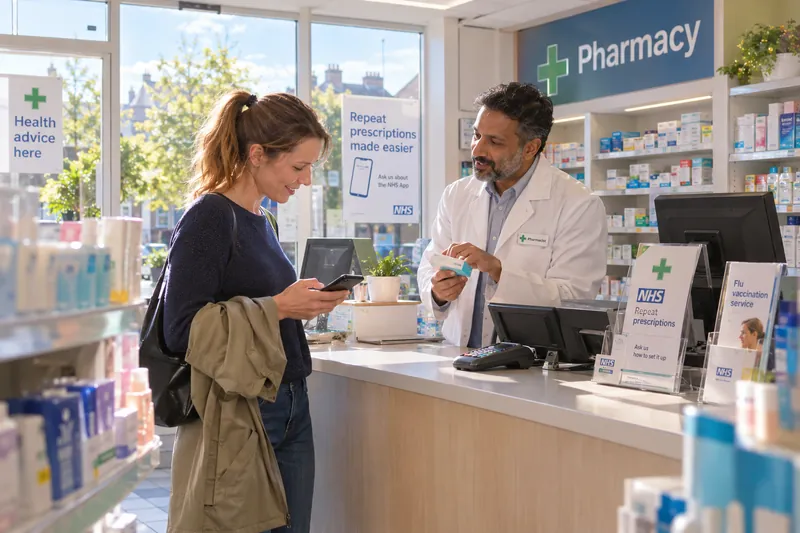
If 111 sends you to a pharmacist, here's what to say at the pharmacy counter.
3. How does the NHS 111 BSL interpreter service work?
You make a video call to a BSL interpreter, who phones an NHS 111 adviser and interprets the whole conversation.
SignVideo, which runs the service, says:
- it's open 24 hours a day, 7 days a week
- it's free, and so is the app
- you can use a computer with a webcam, or the SignVideo app on a smartphone or tablet
- you need a good internet connection
- you need to register with SignVideo to call NHS 111, which you can do in the app
If the 111 adviser thinks you need an ambulance, SignVideo says they will arrange one straight away.
Set it up now, on a day you're well. Registering in the middle of the night with a temperature is nobody's idea of fun.
4. How do I call NHS 111 with Relay UK?
Call 18001 111 using the Relay UK app on a smartphone, tablet or computer, or from a textphone. NHS England confirms both routes.
A relay assistant joins the call. You can type and read, or speak and read the replies, depending on what works for you. Relay UK says the service itself is free; you pay your normal phone charges.
5. What do I do in an emergency?
Call 999 for life-threatening emergencies, such as a stroke, a heart attack or a serious road accident. Don't use 111 for these.
If you're deaf, you have three ways in.
999 BSL. A free video relay service with a BSL interpreter, through the 999 BSL app or website. It runs 24 hours a day, 365 days a year. You don't need to register, but you do need a good internet connection. It's for Deaf people only.
Relay UK on 18000. Dial 18000 instead of 18001, in the Relay UK app or from a textphone. A relay assistant connects you to the right emergency service.
emergencySMS. Text 999, but only if you've registered your mobile first. Relay UK explains how:
- Text the word register to 999.
- Read the reply, then text back yes.
- Wait for the message confirming you're registered.
In an emergency, your text should say which service you need, what's happening, and exactly where you are. Relay UK says texts take longer than a call, so use emergencySMS only if you've no other option, and don't assume it's arrived until you get a reply.

6. What should I set up before I need it?
Ten minutes now saves panic later.
- Register your mobile for emergencySMS.
- Download the Relay UK app and try a call to someone you know.
- If you use BSL, download the SignVideo app and register, and download the 999 BSL app.
- Bookmark 111.nhs.uk on your phone.
- Save your full address, including postcode, in a note you can copy quickly.
If you live with family, show them too. More on making phone calls when you're deaf.
7. What happens when the paramedics arrive, or I get to urgent care?
The phone part is over. Now it's face to face, with people who may be in a hurry.
Tell them straight away.
"I'm deaf. Please face me and speak clearly."
"I use BSL. I need an interpreter."
"Could you write that down?"
In England, NHS services must meet your communication needs under the Accessible Information Standard, and that includes support from a communication professional such as a BSL interpreter. If you have a GP record flag for your communication needs, tell staff anyway. Don't assume it has reached them. Here's what you can ask your GP for.
This is where Subt can genuinely help, and it's worth being clear about what it isn't. Subt doesn't work on phone calls and won't help you reach 111 or 999. But once a paramedic is in your living room, or a nurse is talking to you at an urgent treatment centre, you can open the free web app and put your phone between you, and what they say appears in large text. It's a back-up for a spoken conversation, not a replacement for a BSL interpreter, and captions can mishear medicine names or numbers, so ask for anything important in writing.
8. What about Scotland, Wales and Northern Ireland?
Each nation runs its own service.
Scotland: NHS 24 on 111. BSL users living in Scotland can use contactSCOTLAND-BSL, Scotland's national BSL video interpreting service, which NHS Grampian says is available 24 hours a day, 7 days a week, including for calls to NHS 24.
Wales: NHS 111 Wales. NHS 111 Wales says you can dial 18001 111 from a textphone or the Relay UK app. It also offers BSL through SignVideo, listed as 8am to midnight, 7 days a week. Calls to 111 in Wales are free from landlines and mobiles.
Northern Ireland. The NHS website points people in Northern Ireland to nidirect. For urgent care that isn't life-threatening, nidirect lists your GP or the GP out of hours service, minor injuries units, community pharmacists, and a Phone First service in the Northern, South Eastern, Southern and Western Trust areas.
For emergencies, 999 BSL, Relay UK and emergencySMS are UK-wide services required by Ofcom, so section 5 applies wherever you live.
Quick answers
Can I text NHS 111?
The NHS doesn't list an SMS number for 111 in England. The options it gives are 111 online, the BSL service and text relay, by calling 18001 111 in the Relay UK app, where you type and read rather than listen.
Is the NHS 111 BSL service free?
Yes. SignVideo says both the service and the app are free. You need to register with SignVideo before your first call.
Do I need to register for 999 BSL?
No. 999 BSL says there's no need to register: download the app or use the website when you have an emergency. emergencySMS is different, and does need registering in advance.
Sources
- NHS: When to use 111
- NHS: When to call 999
- NHS 111 online: Other ways to contact 111
- NHS England: Accessing NHS 111
- SignVideo: NHS 111 British Sign Language (BSL) service
- Relay UK: Home
- Relay UK: Contact 999 using Relay UK
- 999 BSL: FAQs
- RNID: How to contact NHS 111 if you're deaf or have hearing loss
- NHS England: Accessible Information Standard requirements (DAPB1605)
- NHS 111 Wales: Contact us
- NHS Grampian: Contacting NHS 24 for Deaf/BSL users
- nidirect: Urgent and emergency care services
- Ofcom: Communications services for disabled people